Conference Tempos e Políticas de Moralidade (2026)
Conference Tempos e Políticas de Moralidade (2026)
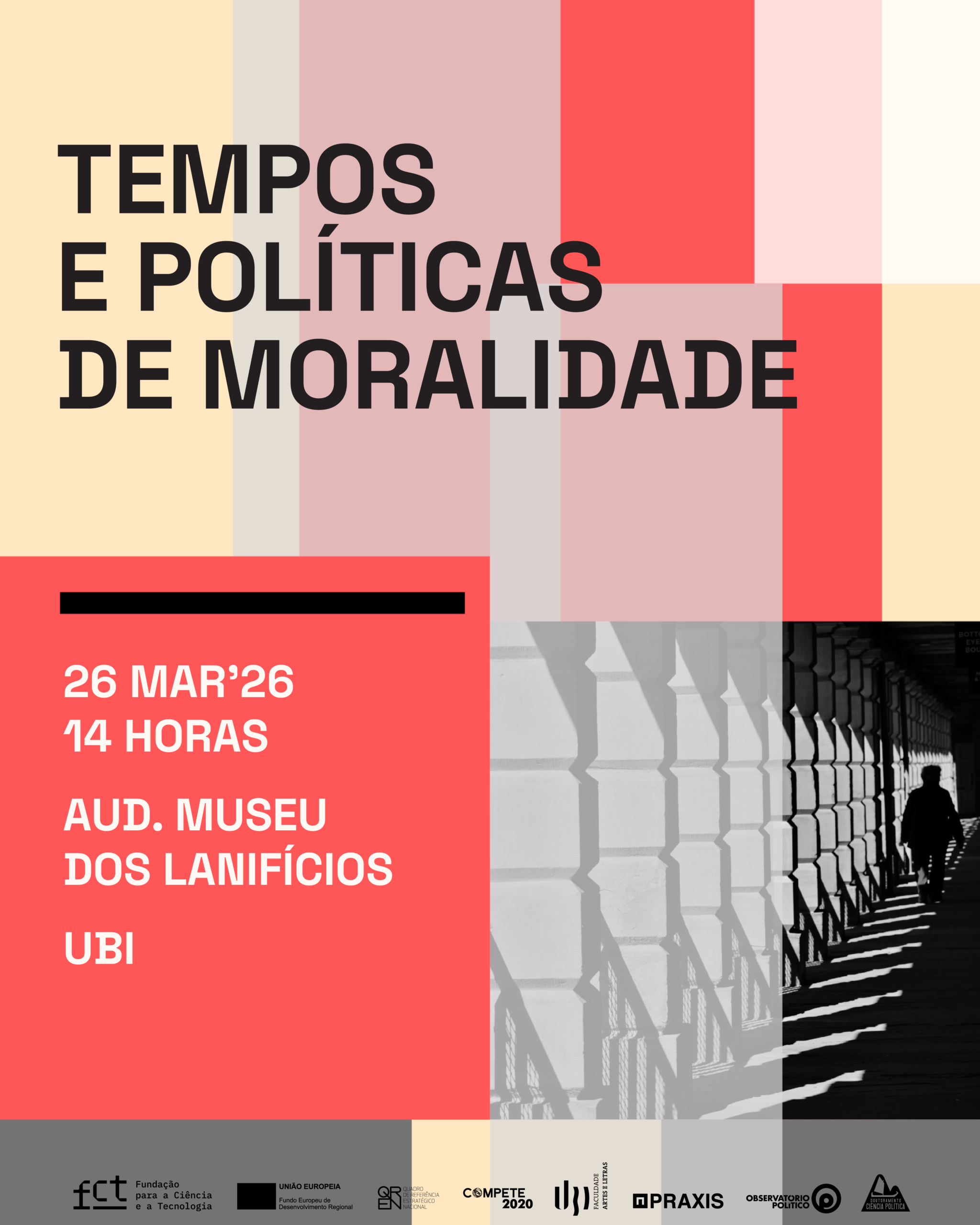
On the 26th of March, 2026, the conference “Tempos e Políticas de Moralidade” took place, a joint initiative between the Political Observatory and Praxis – Centro de Filosofia, Política e Cultura, to discuss policies on morality in Portuguese research and society.
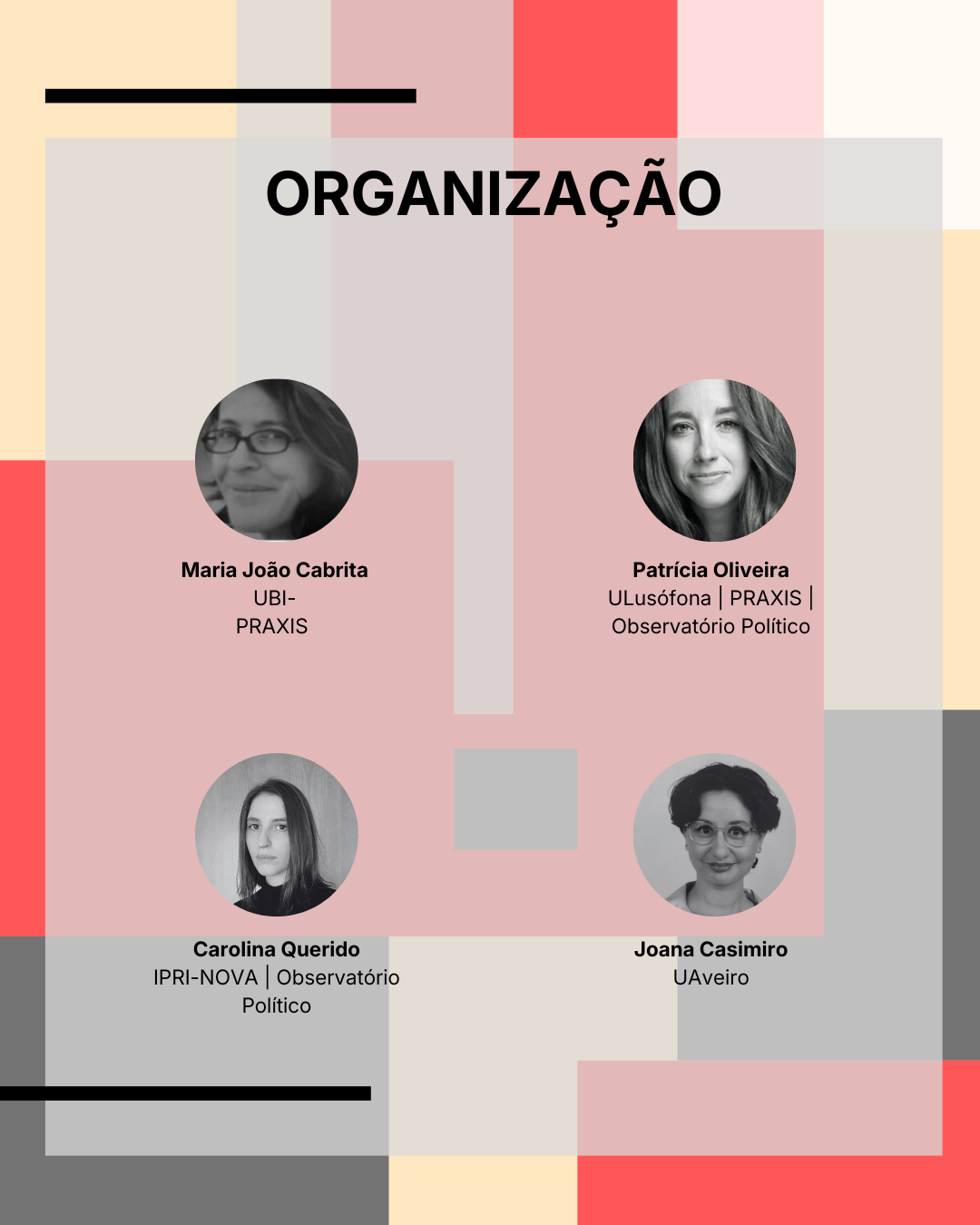
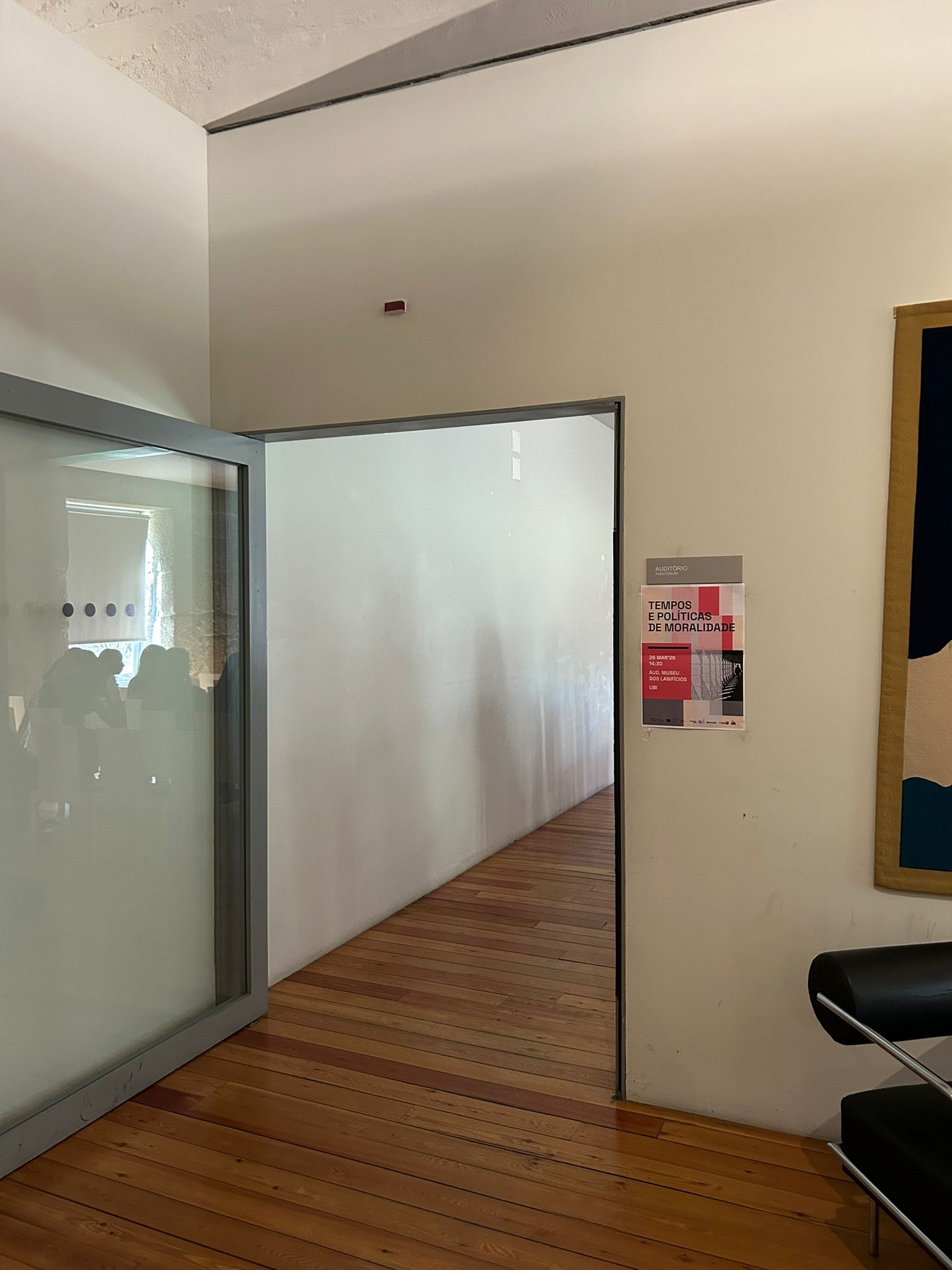
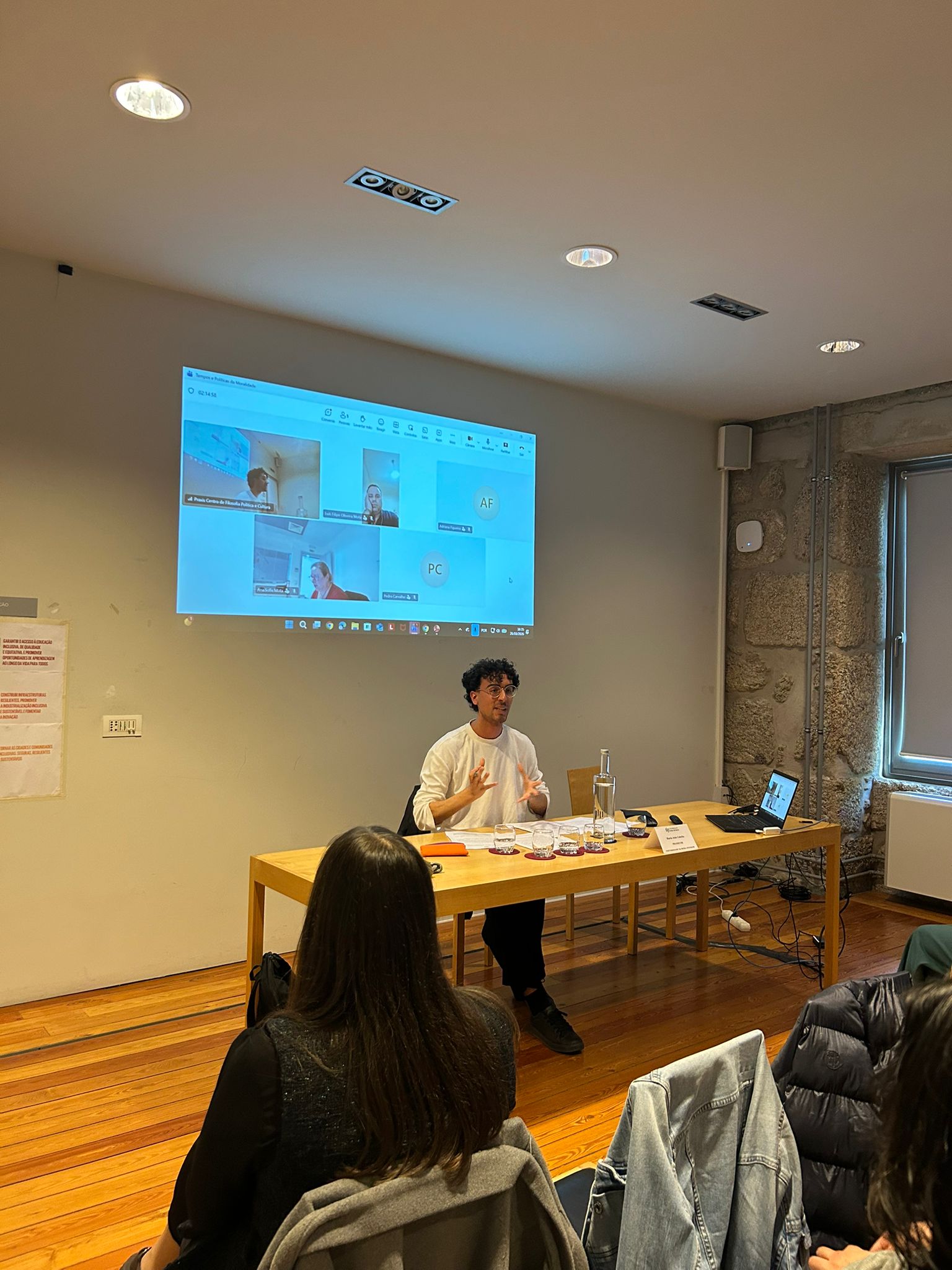
The event, which took place in the Museu dos Lanifícios Auditorium at the University of Beira Interior, with a simultaneous online broadcast, began at 2.30 pm with the opening session led by the organising professors, Maria João Cabrita and Patrícia Oliveira. Maria João Cabrita, Director of the PhD Programme in Political Science, Scientific Coordinator of Praxis, and PhD Researcher at the Political Observatory, emphasised the need to discuss these issues, particularly in the current political context, to foster an informed reflection. Meanwhile, Patrícia Oliveira, Assistant Professor at Lusófona University and Deputy Coordinator of the Political Observatory, welcomed the launch of this initiative, a decentralised “reunion”, outside of Lisbon, centred on a “key theme in contemporary society”.
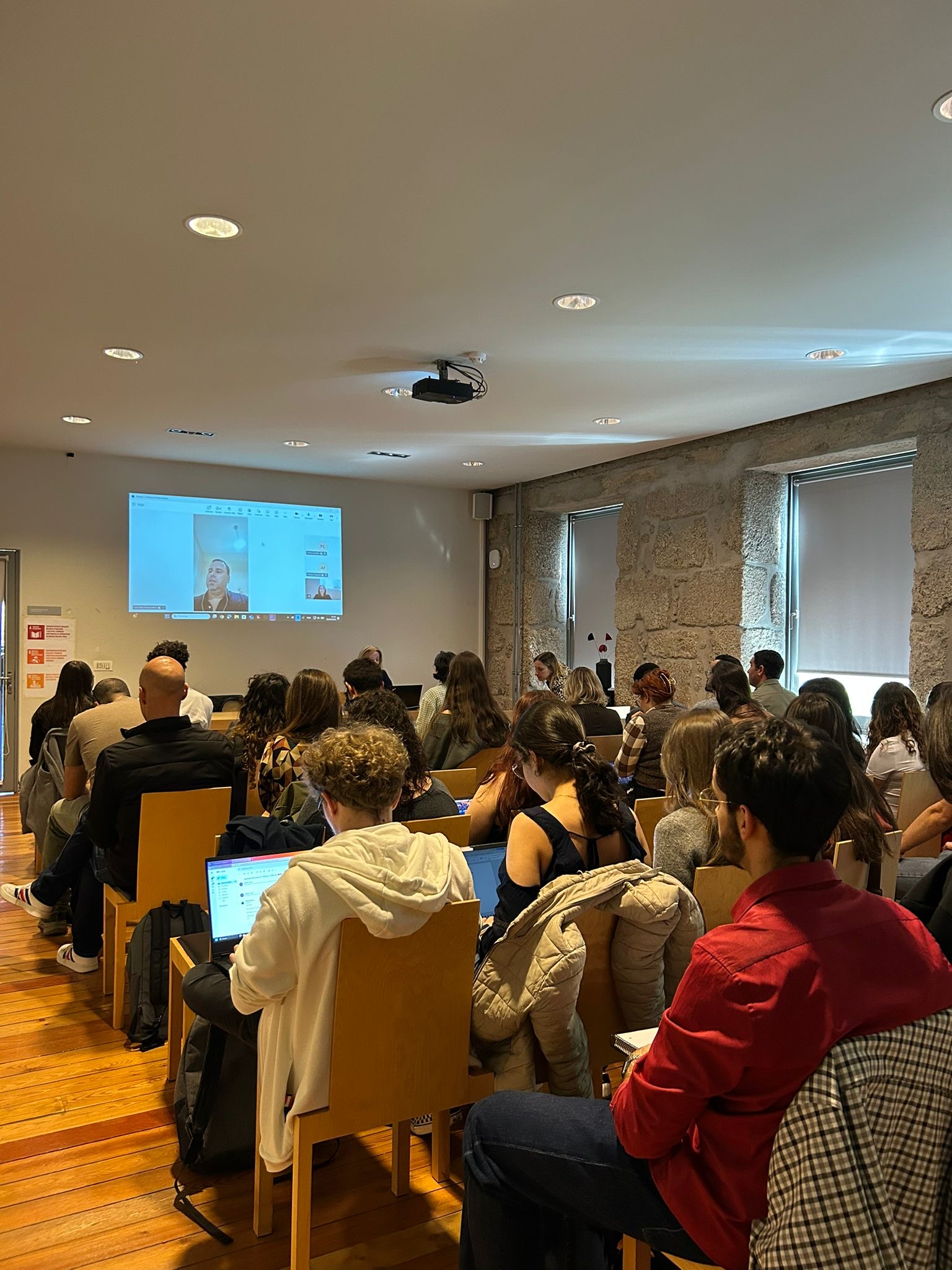
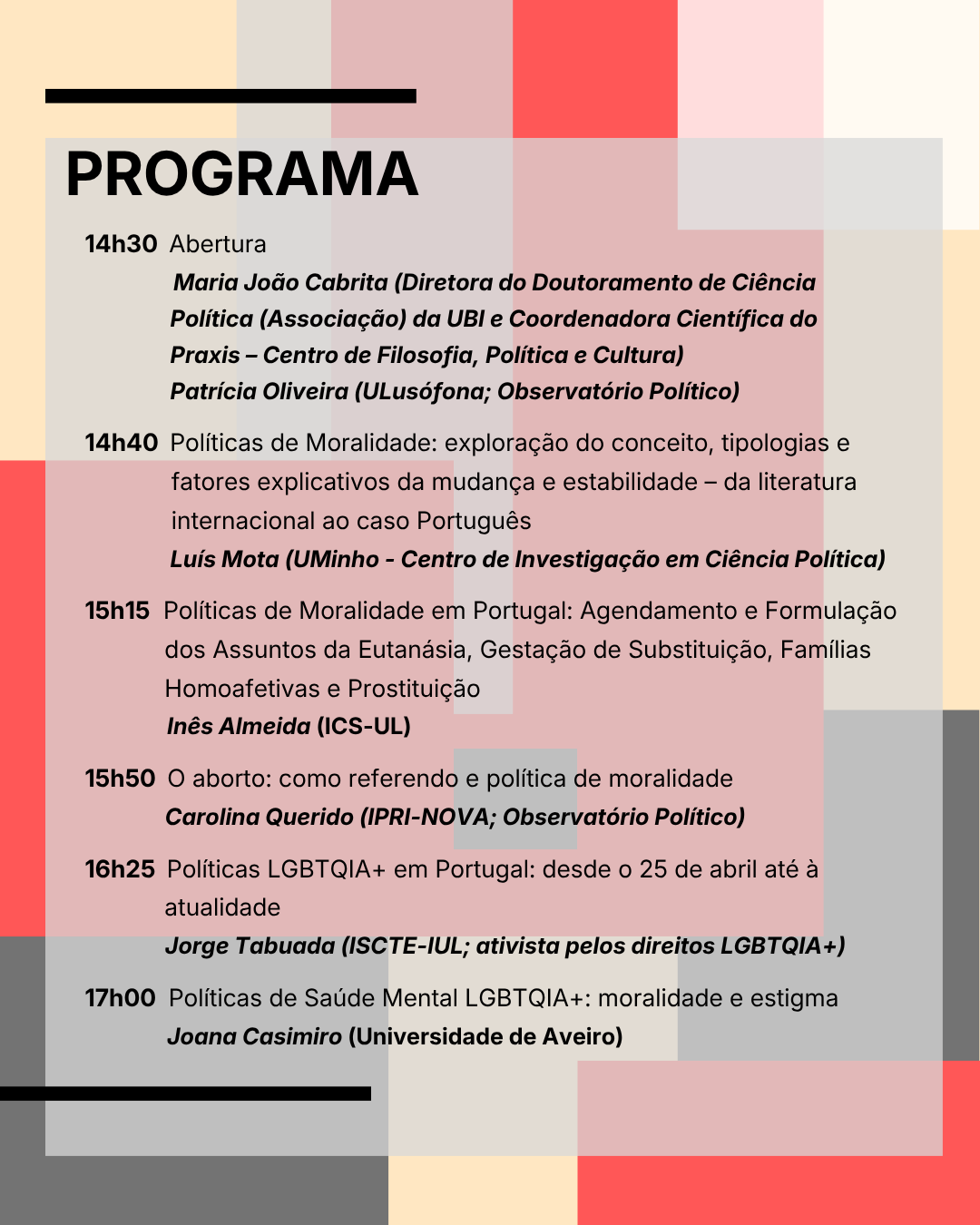
This was followed by the first session, “Políticas de Moralidade: exploração do conceito, tipologias e fatores explicativos da mudança e estabilidade – da literatura internacional ao caso Português”, chaired by Luís Mota (University of Minho). Speaking remotely from Ireland, his presentation focused on a review of the literature on morality policies and on research carried out in the Portuguese context with former students of the University of Aveiro: Bruna Fernandes, Inês Almeida, Diogo de Sousa and Diogo Russo.
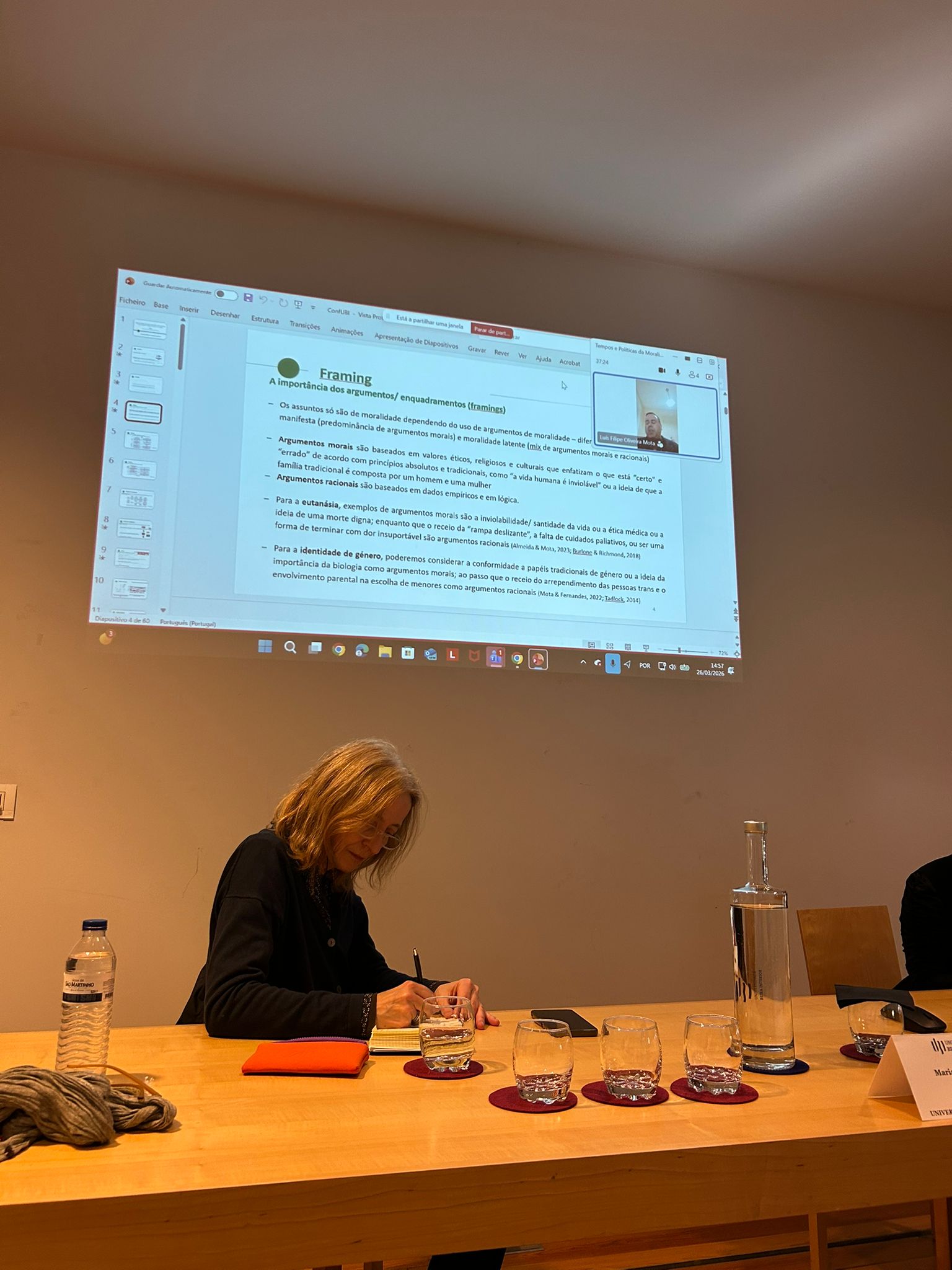
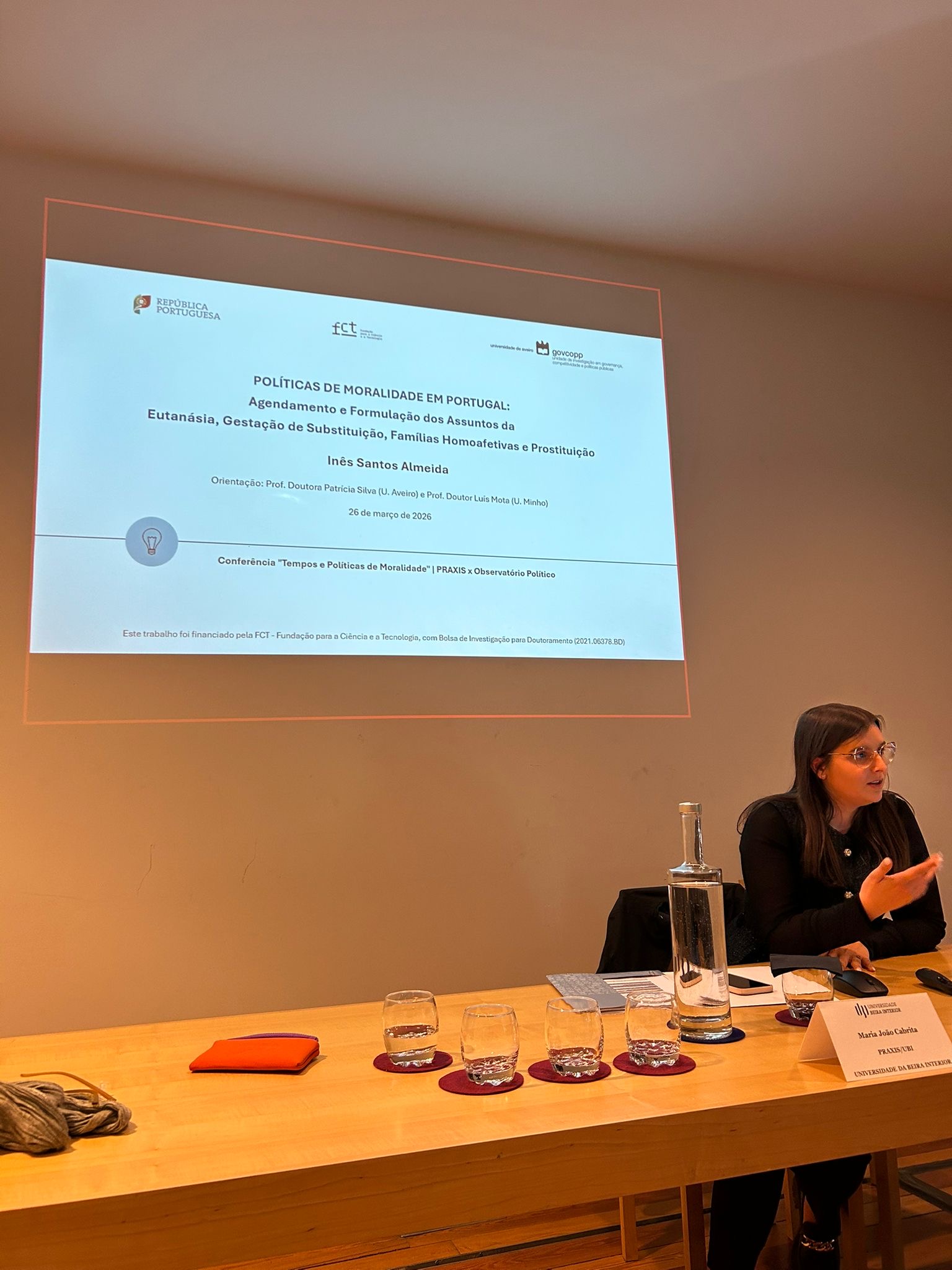
This was followed by a presentation by Inês Almeida (ICS-UL) titled “Políticas de Moralidade em Portugal: Agendamento e Formulação dos Assuntos da Eutanásia, Gestação de Substituição, Famílias Homoafetivas e Prostituição”, focusing on the empirical findings of her doctoral thesis. She began by explaining the origin and relevance of the project, which fills a gap in Portuguese analysis through the examination of four case studies (euthanasia, surrogacy, homoaffective families and prostitution), a wide range of actors and a long time period (20 years).
Afterwards, Carolina Querido (IPRI-NOVA/Observatório Político) spoke about “O aborto como referendo e política de moralidade“, focusing on the developments of her doctoral thesis (“O teu corpo, a minha escolha? Uma análise da politização do aborto na agenda dos partidos PRR”). Her research, which stems from a moment she described as a true “focusing event”, is centered on the relationship between gender and populisms, still relatively unexplored in the literature, despite its growing relevance in the national and european contexts.
Next, Jorge Tabuada (ISCTE-IUL), LGBTQIA+ activist, gave a presentation on “Políticas LGBTQIA+ em Portugal: desde o 25 de abril até à atualidade”. His intervention was prompted by a reflection on the current political environment, marked by rollbacks of recently conquered rights. He emphasized the importance of discussing these topics in a context where forms of discrimination persist and disinformation and hate speech are on the rise, both in Portugal and in the world.
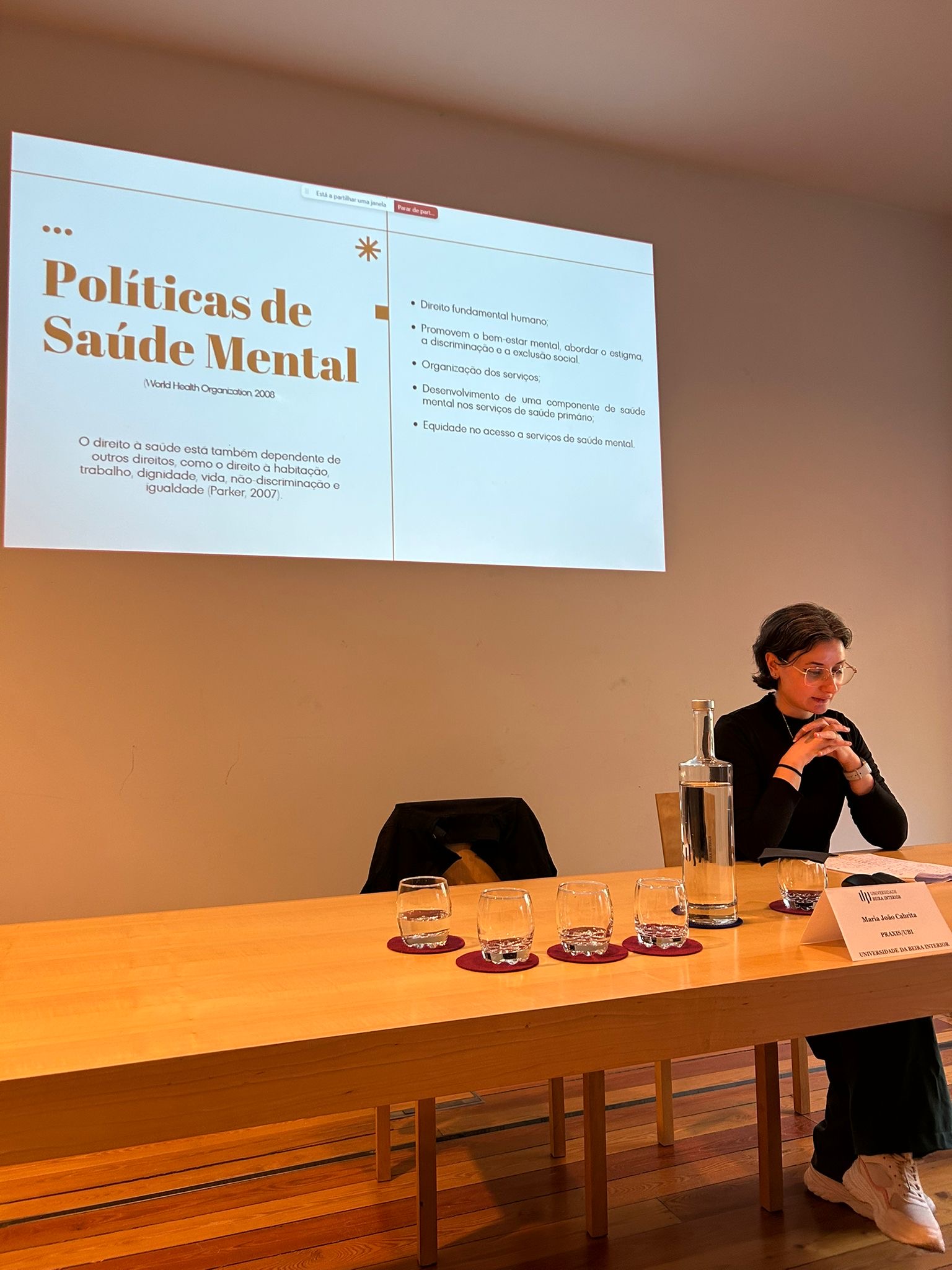
The final session, “Políticas de Saúde Mental LGBTQIA+: moralidade e estigma” was led by Joana Casimiro (Universidade de Aveiro). Based on the assumption that there are no mental health policies in Portugal for these communities, the presentation highlighted the near absence of structured responses, emphasizing the impact of intersectional stigma and double stigma on the demand for and access to adequate health care by them.
The event concluded with the closing remarks by Maria João Cabrita, which drew attention to setbacks in the areas of gender rights and equality, emphasizing that, from the onset of the COVID-19 pandemic to the present, multiple forms of opposition to achievements previously considered established have become apparent.
The Political Observatory would like to thank everyone who attended and contributed to the success of Tempos e Políticas de Moralidade.