The Fog in the Geopolitics of the Middle East (2025)
The Fog in the Geopolitics of the Middle East (2025)
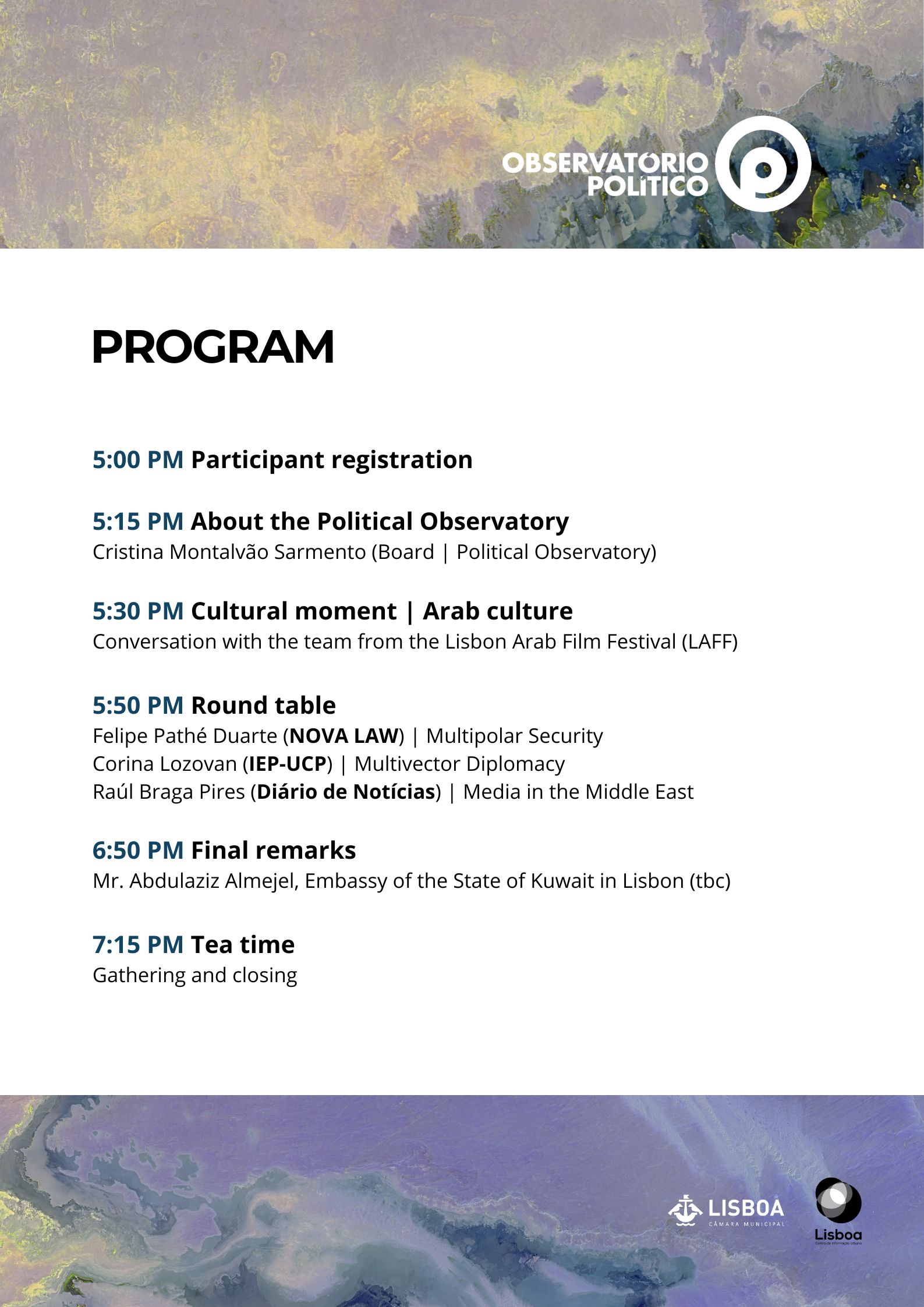
On October 1, 2025 the Political Observatory organised a conference entitled “The Fog in the Geopolitics of the Middle East”. This was an initiative of the Political Observatory organised in coordination with researcher Corina Lozovan (IEP-UCP).
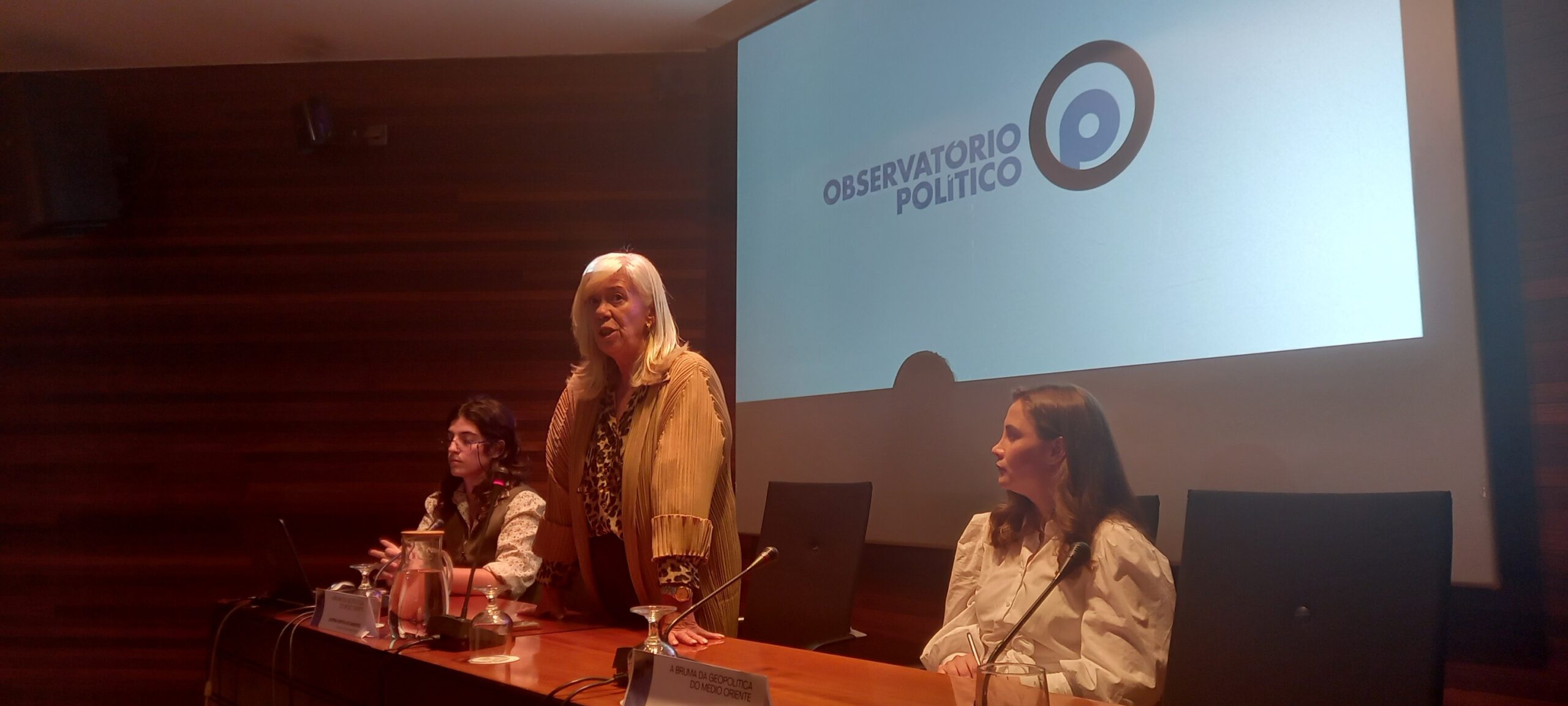
The conference began with a speech by Professor Cristina Montalvão Sarmento (Director of the Political Observatory), who reviewed the 16-year history of the OP. Professor Cristina Montalvão Sarmento highlighted the various conferences organised by the Political Observatory, the development of the OPen Arena newsletter, and the latest issue of Political Observer – Revista Portuguesa de Ciência Política, made available online the previous day (September 30, 2025).
This was followed by a presentation by the co-director of the Lisbon Arab Film Festival (LAFF), Saoussen Khalifa, who spoke about Arab culture(s) and their expression in cinema and beyond. “The festival is a window that shows different political and economic realities (…) It is more than just cinema. Many films, even though they are fiction, touch on themes specific to the Arab world,” said Saoussen Khalifa.
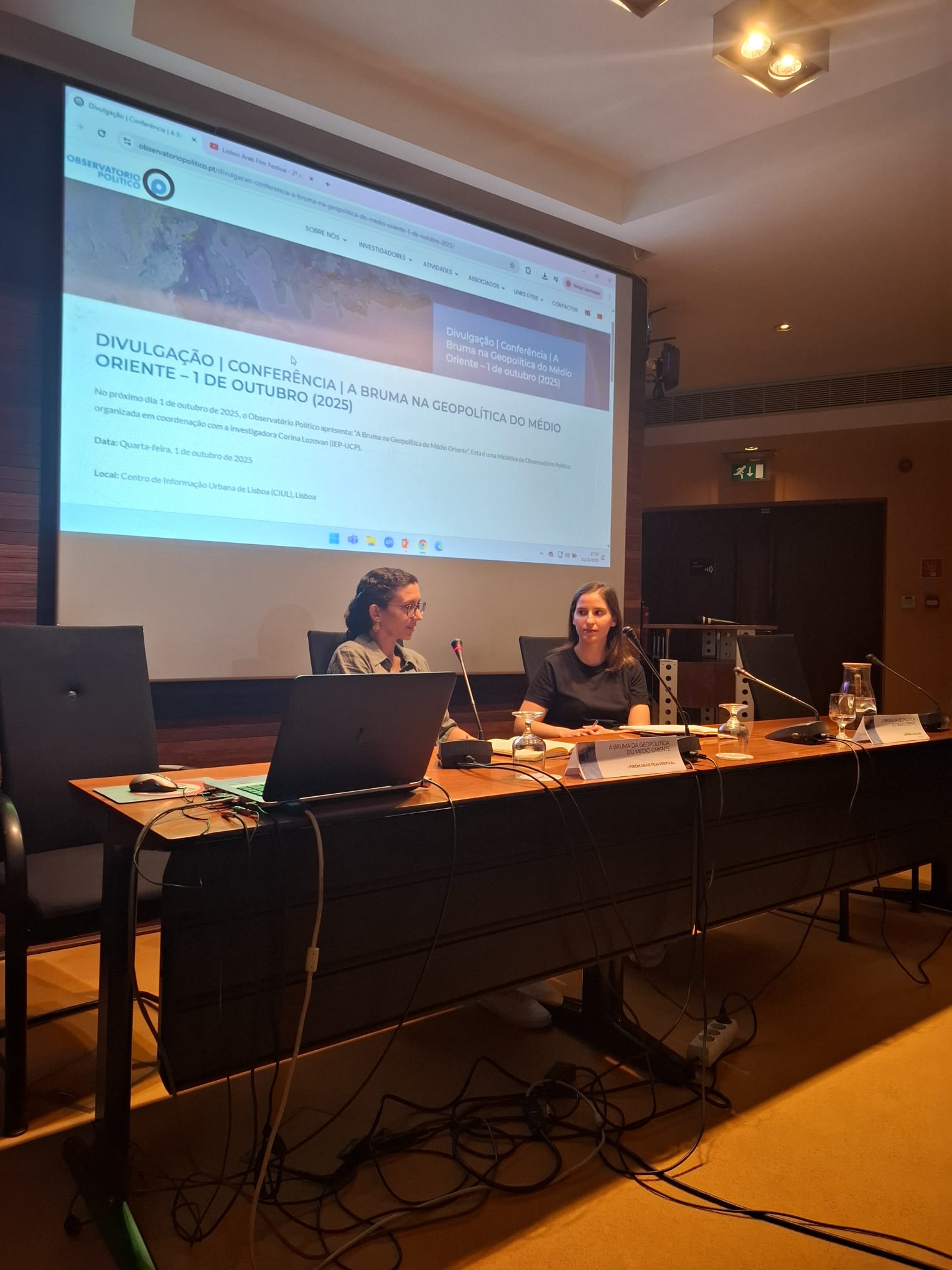
On the subject of multivector diplomacy, researcher Corina Lozovan (IEP-UCP) presented us with a scenario of ‘uncertainty’, where we can glimpse what the various Middle Easts might be like. Emphasising the role of various states in the international system, the researcher highlighted the projection of the Arab Gulf countries as mediators for global crises and the resurgence of the concept of geoeconomics.
On the other hand, Professor Felipe Pathé Duarte (NOVA LAW) stated that: “The Middle East as a concept is a term that is constantly under debate. What is the Middle East really? (…) We must look at the geographical, ethnic and religious mosaic that is the Middle East.” In his speech, Professor Felipe Pathé Duarte discussed the reasons behind these tensions from a historical and holistic perspective of the region.
Finally, we heard from journalist Raúl Braga Pires (Diário de Notícias), who spoke about the media in the Middle East. He highlighted the lack of diversity in the narratives of various Western media outlets and the importance of Al Jazeera. In a more graphic construction than previous analyses, the advent of Al Jazeera also marks the beginning of the Middle East’s own narrative for the Middle East. Touching on crucial issues such as colonialism and religion, the journalist leaves a warning: ‘With the advent of new technologies, it is very important that television and cinema remain odourless because no one will be able to bear the scenario of war.
The subsequent exchange of ideas was very enriching, with a lot of audience participation and enthusiasm for the topic under discussion. After the closing remarks by Professor Patrícia Oliveira (deputy coordinator of the Political Observatory), participants were able to extend this debate beyond the Q&A period at Tea Time.
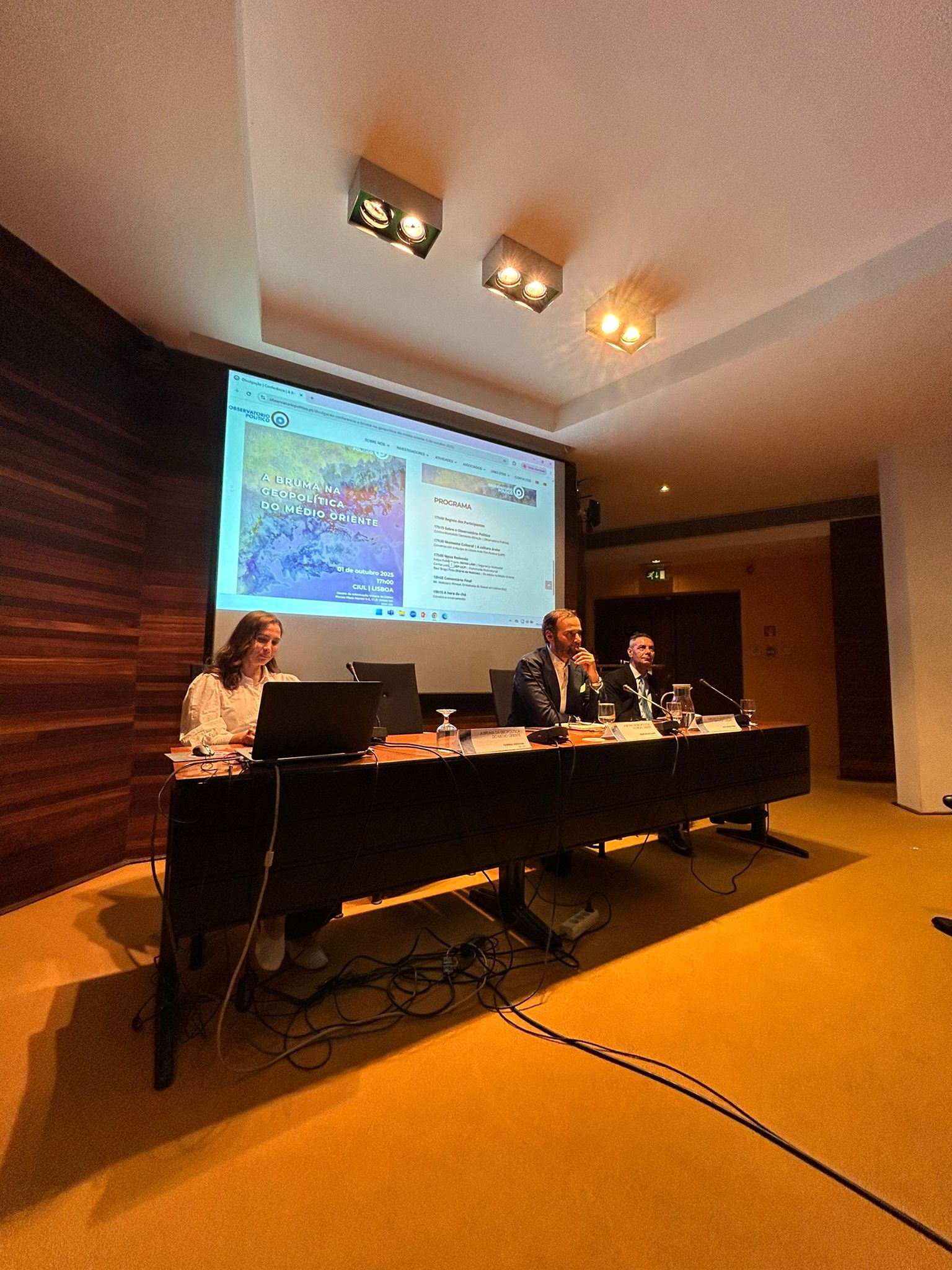
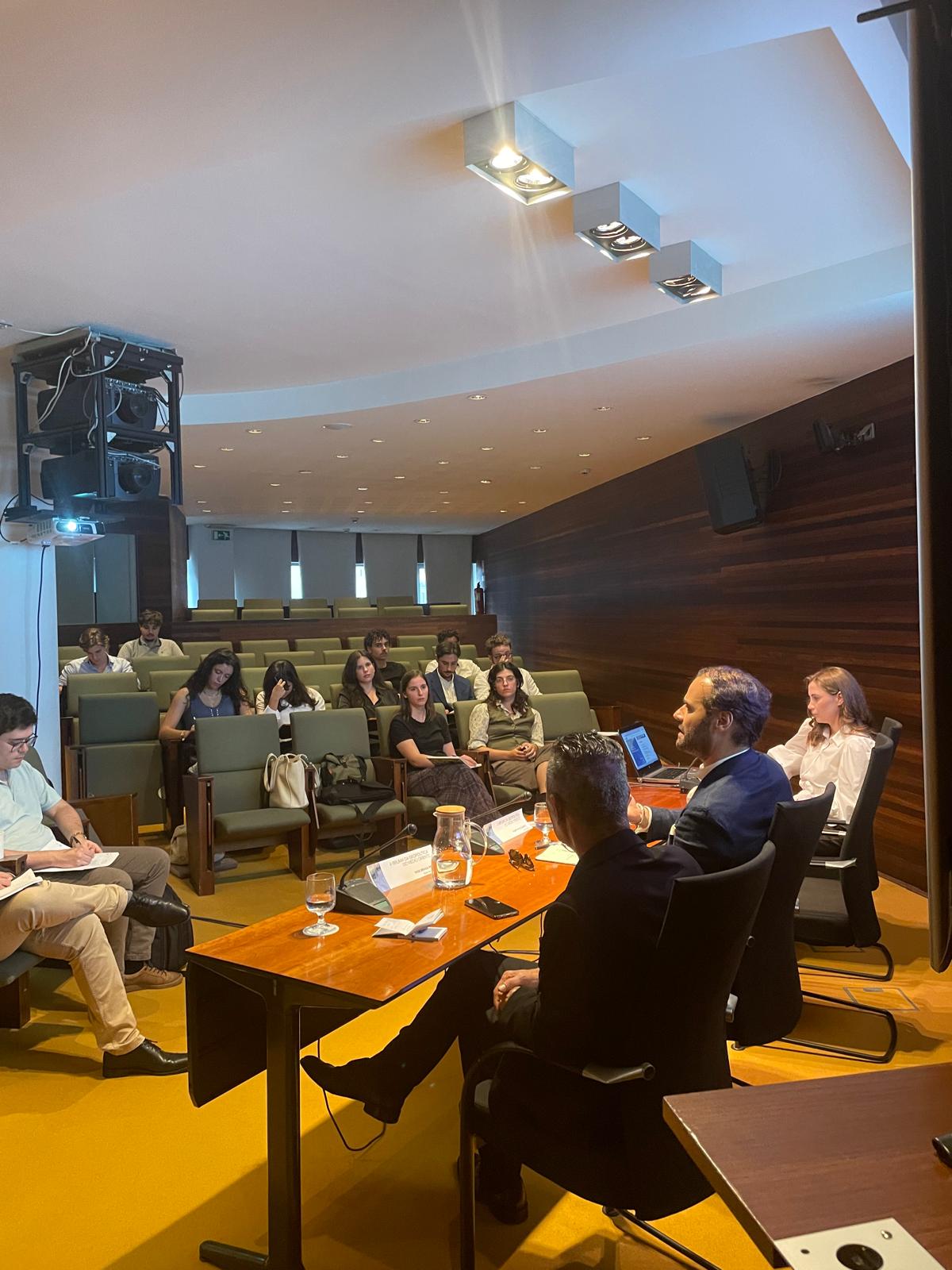
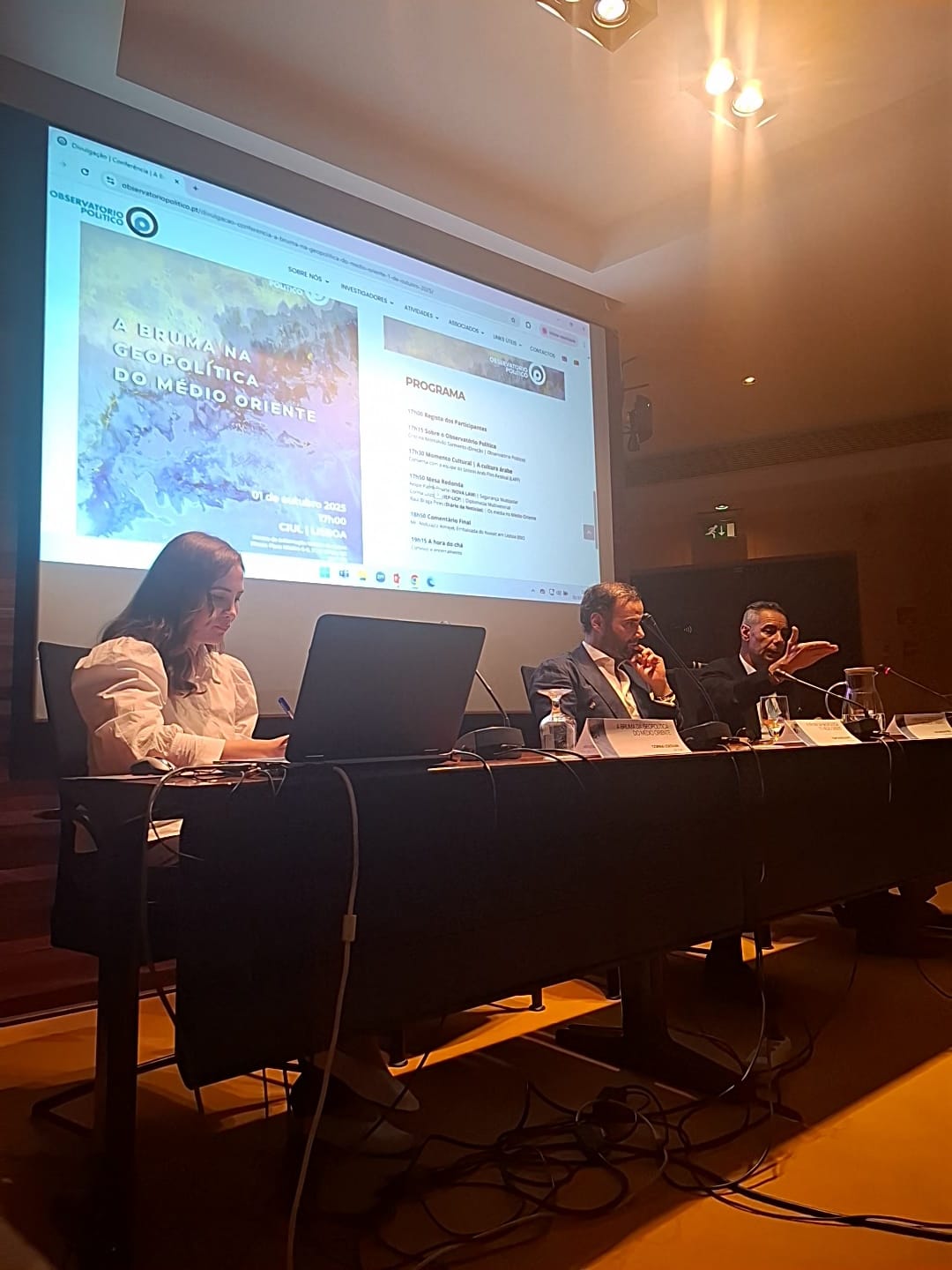
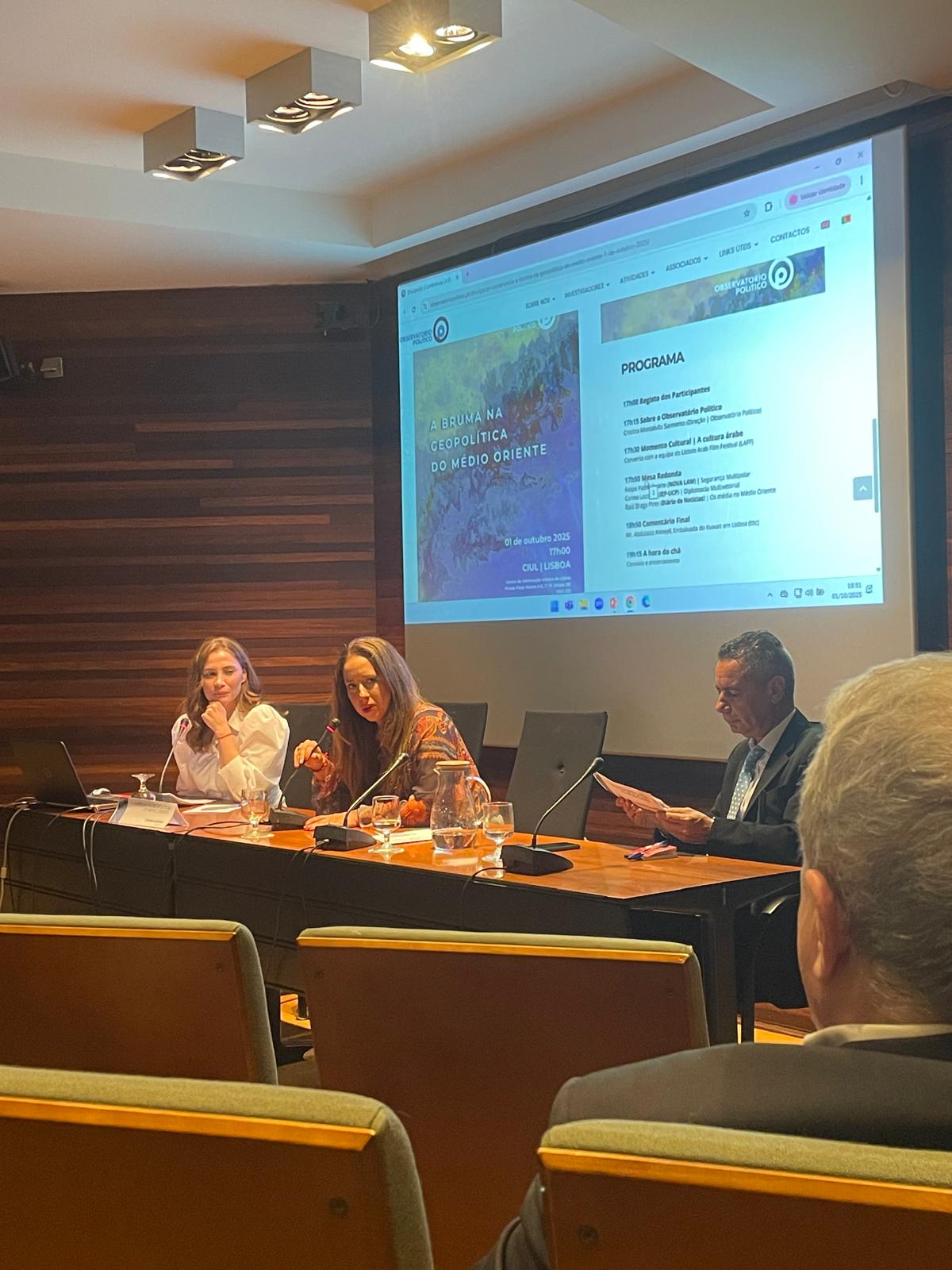
The Political Observatory would like to thank everyone who attended and contributed to the success of The Fog in the Geopolitics of the Middle East.